Buy buxusrups.eu ?
We are moving the project
buxusrups.eu .
Are you interested in purchasing the domain
buxusrups.eu ?
domain@kv-gmbh.de · 0541-91531010
Buy buxusrups.eu ?
How to create a titration curve of a conductivity titration?
To create a titration curve of a conductivity titration, you would first need to set up your titration apparatus with a conductivity meter. Begin by measuring the initial conductivity of the solution being titrated. As you add titrant incrementally, record the conductivity at each point. Plot the conductivity values against the volume of titrant added to create a titration curve. The curve will typically show a sharp increase in conductivity at the equivalence point, allowing you to determine the endpoint of the titration. **
How does a titration with the degree of titration work?
A titration with the degree of titration works by gradually adding a titrant of known concentration to a solution of the analyte until the reaction between the two is complete. The point at which the reaction is complete is determined by using an indicator or a pH meter. The amount of titrant required to reach this point is used to calculate the concentration of the analyte in the original solution. The degree of titration refers to the extent to which the reaction has progressed and is typically expressed as a percentage. **

Similar search terms for Titration
Top-Angebote
Products related to Titration:
-
Multicon Wholesale Hub Reflective Bird Repellent Spinners, Wind Powered Rotation For Pigeons, Woodpeckers, And Outdoor Pest Control Reflective Bird Repellent Spinners, Wind Powered Rotation For Pigeons, Woodpeckers, And Outdoor Pest ControlProtect Your Outdoor Spaces from Birds with 2PCS Reflective Wind Bird Repellent Spinners If you're tired of battling bird damage in your garden, roof, or pool area, our 2PCS Reflective Wind Bird Repellent Spinners are the perfect solution. Crafted...81,97 $*Shipping: 0,00 $Secure redirect to the provider
-
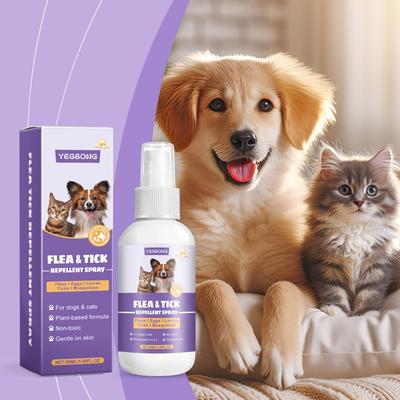
Happy Pet Pantry Natural Flea And Tick Spray For Dogs & Pets Long Lasting Insect Repellent Treatment Natural Flea And Tick Spray For Dogs & Pets Long Lasting Insect Repellent TreatmentKeep your furry companions safe, comfortable, and itchfree with a gentle yet powerful solution designed for everyday protection. This flea and tick spray for dogs helps repel and eliminate unwanted pests while maintaining a fresh, odorfree coat....31,97 $*Shipping: 0,00 $Secure redirect to the provider
-
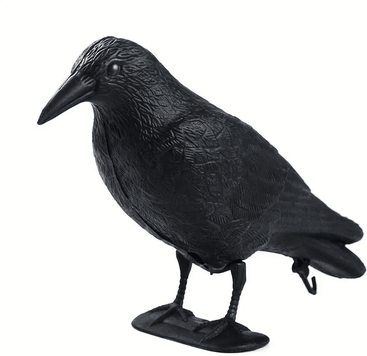
Uplift Curations Outdoor Garden Bird Repellent Raven Decoy Black Simulation Crow Decoration For Pest Control And Pigeon Deterrent Outdoor Garden Bird Repellent Raven Decoy Black Simulation Crow Decoration For Pest Control And Pigeon DeterrentKeep your garden free from pests with this realistic garden bird repellent designed to deter unwanted birds and protect outdoor spaces. This striking black simulation raven doubles as an outdoor raven decoration while helping scare off pigeons,...77,50 $*Shipping: 0,00 $Secure redirect to the provider
-
Happy Pet Pantry Natural Pet Flea & Tick Repellent Spray For Dogs And Cats Gentle Skin Relief Pest Control Solution Natural Pet Flea & Tick Repellent Spray For Dogs And Cats Gentle Skin Relief Pest Control SolutionProtect your furry companions from constant itching, bites, and discomfort with a gentle yet effective care solution designed for everyday use. This pet flea repellent spray helps support fast relief from fleas and ticks while soothing irritated...31,97 $*Shipping: 0,00 $Secure redirect to the provider


-
How does titration work?
Titration is a technique used in chemistry to determine the concentration of a specific substance in a solution. It involves slowly adding a solution of known concentration (titrant) to a solution of unknown concentration until the reaction between the two is complete. This is typically indicated by a color change or other observable change. By measuring the volume of titrant required to reach the endpoint, the concentration of the unknown solution can be calculated using stoichiometry. **
-
What is a titration?
A titration is a laboratory technique used to determine the concentration of a specific substance in a solution. It involves slowly adding a solution of known concentration (titrant) to a solution of unknown concentration until the reaction between the two is complete. The point at which the reaction is complete is called the equivalence point, which is used to calculate the concentration of the unknown solution. Titration is commonly used in chemistry for various purposes, such as determining the acidity or alkalinity of a solution. **
-
Can the titration volume be calculated without having performed the titration beforehand?
No, the titration volume cannot be accurately calculated without having performed the titration beforehand. The titration volume is determined by the amount of titrant needed to reach the equivalence point, which can only be determined through the actual titration process. The titration volume is a crucial parameter in determining the concentration of the analyte in the sample, so it is essential to perform the titration to obtain this information accurately. **
-
What does a titration curve look like when no titration is performed?
When no titration is performed, a titration curve would simply be a straight horizontal line at the initial pH of the solution being tested. This is because there would be no addition of titrant to cause any changes in pH. The curve would remain flat and unchanging until a titrant is added to initiate the titration process. **
What is the difference between a pH-metric titration and an indicator titration?
A pH-metric titration involves the use of a pH meter to measure the pH of a solution as a titrant is added to it. This allows for a precise determination of the equivalence point of the titration. On the other hand, an indicator titration uses a chemical indicator that changes color at or near the equivalence point to signal the end of the titration. While pH-metric titrations provide more accurate and precise results, indicator titrations are simpler and more commonly used in introductory chemistry labs. **
What is a back titration?
A back titration is a technique used in analytical chemistry to determine the concentration of an analyte that reacts slowly or incompletely with a direct titration method. It involves adding an excess of a known reagent to the analyte, allowing the reaction to proceed, and then titrating the excess reagent that did not react with a second titrant. By measuring the amount of the second titrant required to react with the excess reagent, the concentration of the analyte can be calculated. Back titrations are particularly useful when the analyte is volatile, weakly acidic or basic, or when there are interfering substances present. **
Top-Angebote
Products related to Titration:
-
Inspired Deals Rechargeable Ultrasonic Mouse & Bat Repellent Pest Control Device Bird RepellerSay goodbye to unwanted pests invading your space with a smart, chemicalfree solution designed for modern living. The ultrasonic mouse repellent technology works silently in the background, helping create an uncomfortable environment for rodents and...44,97 $*Shipping: 0,00 $Secure redirect to the provider
-
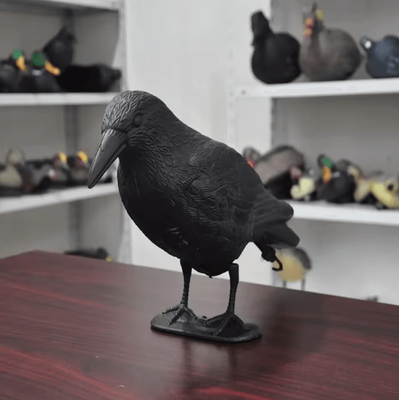
Inspire Essentials RealGuard Black Crow Decoy Realistic Bird Repellent For Garden, Yard, And Outdoor Pest Control RealGuard Black Crow Decoy Realistic Bird Repellent For Garden, Yard, And Outdoor Pest ControlBring peace back to your outdoor space with the black crow decoy that looks and feels remarkably real. Designed to deter pigeons, sparrows, and other unwanted birds, this realistic bird repellent uses lifelike detail and natural posture to keep...42,48 $*Shipping: 0,00 $Secure redirect to the provider
-
Multicon Wholesale Hub Reflective Bird Repellent Spinners, Wind Powered Rotation For Pigeons, Woodpeckers, And Outdoor Pest Control Reflective Bird Repellent Spinners, Wind Powered Rotation For Pigeons, Woodpeckers, And Outdoor Pest ControlProtect Your Outdoor Spaces from Birds with 2PCS Reflective Wind Bird Repellent Spinners If you're tired of battling bird damage in your garden, roof, or pool area, our 2PCS Reflective Wind Bird Repellent Spinners are the perfect solution. Crafted...81,97 $*Shipping: 0,00 $Secure redirect to the provider
-
Happy Pet Pantry Natural Flea And Tick Spray For Dogs & Pets Long Lasting Insect Repellent Treatment Natural Flea And Tick Spray For Dogs & Pets Long Lasting Insect Repellent TreatmentKeep your furry companions safe, comfortable, and itchfree with a gentle yet powerful solution designed for everyday protection. This flea and tick spray for dogs helps repel and eliminate unwanted pests while maintaining a fresh, odorfree coat....31,97 $*Shipping: 0,00 $Secure redirect to the provider
-
How to create a titration curve of a conductivity titration?
To create a titration curve of a conductivity titration, you would first need to set up your titration apparatus with a conductivity meter. Begin by measuring the initial conductivity of the solution being titrated. As you add titrant incrementally, record the conductivity at each point. Plot the conductivity values against the volume of titrant added to create a titration curve. The curve will typically show a sharp increase in conductivity at the equivalence point, allowing you to determine the endpoint of the titration. **
-
How does a titration with the degree of titration work?
A titration with the degree of titration works by gradually adding a titrant of known concentration to a solution of the analyte until the reaction between the two is complete. The point at which the reaction is complete is determined by using an indicator or a pH meter. The amount of titrant required to reach this point is used to calculate the concentration of the analyte in the original solution. The degree of titration refers to the extent to which the reaction has progressed and is typically expressed as a percentage. **
-
How does titration work?
Titration is a technique used in chemistry to determine the concentration of a specific substance in a solution. It involves slowly adding a solution of known concentration (titrant) to a solution of unknown concentration until the reaction between the two is complete. This is typically indicated by a color change or other observable change. By measuring the volume of titrant required to reach the endpoint, the concentration of the unknown solution can be calculated using stoichiometry. **
-
What is a titration?
A titration is a laboratory technique used to determine the concentration of a specific substance in a solution. It involves slowly adding a solution of known concentration (titrant) to a solution of unknown concentration until the reaction between the two is complete. The point at which the reaction is complete is called the equivalence point, which is used to calculate the concentration of the unknown solution. Titration is commonly used in chemistry for various purposes, such as determining the acidity or alkalinity of a solution. **
Similar search terms for Titration
-
Uplift Curations Outdoor Garden Bird Repellent Raven Decoy Black Simulation Crow Decoration For Pest Control And Pigeon Deterrent Outdoor Garden Bird Repellent Raven Decoy Black Simulation Crow Decoration For Pest Control And Pigeon DeterrentKeep your garden free from pests with this realistic garden bird repellent designed to deter unwanted birds and protect outdoor spaces. This striking black simulation raven doubles as an outdoor raven decoration while helping scare off pigeons,...77,50 $*Shipping: 0,00 $Secure redirect to the provider
-
Happy Pet Pantry Natural Pet Flea & Tick Repellent Spray For Dogs And Cats Gentle Skin Relief Pest Control Solution Natural Pet Flea & Tick Repellent Spray For Dogs And Cats Gentle Skin Relief Pest Control SolutionProtect your furry companions from constant itching, bites, and discomfort with a gentle yet effective care solution designed for everyday use. This pet flea repellent spray helps support fast relief from fleas and ticks while soothing irritated...31,97 $*Shipping: 0,00 $Secure redirect to the provider
-
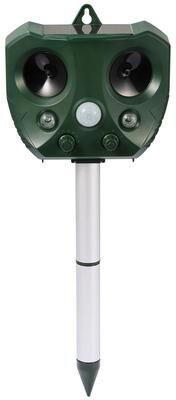
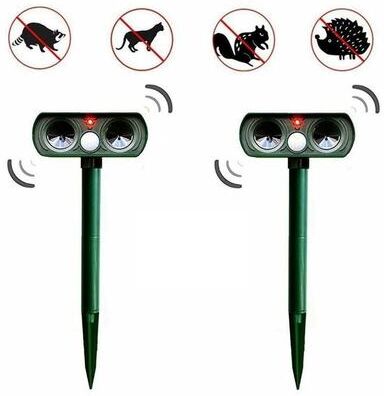
All Categories Goods Outdoor Solar Ultrasonic Pest Repellent, Effective Cat, Dog, Fox Deterrent For Gardens Solar Powered Animal Control Outdoor Solar Ultrasonic Pest Repellent, Effective Cat, Dog, Fox Deterrent For Gardens Solar Powered Animal ControlKeep your garden safe from unwanted animals with the Outdoor Solar Ultrasonic Power Pest Animal Repeller. This ecofriendly, solarpowered device effectively deters cats, dogs, foxes, and other pests, ensuring your outdoor space remains free from...76,97 $*Shipping: 0,00 $Secure redirect to the provider
-
All Categories Goods Ultrasonic Solar Powered Animal Repeller Outdoor Pest Control For Cats, Mice & Deer 2 pkKeep your garden and home free from pests with the Ultrasonic Solar Powered Animal Repeller. Designed for ecoconscious homeowners, this device repels unwanted animals like cats, mice, and deer without harmful chemicals. Powered by solar energy, it's...89,97 $*Shipping: 0,00 $Secure redirect to the provider
-
Can the titration volume be calculated without having performed the titration beforehand?
No, the titration volume cannot be accurately calculated without having performed the titration beforehand. The titration volume is determined by the amount of titrant needed to reach the equivalence point, which can only be determined through the actual titration process. The titration volume is a crucial parameter in determining the concentration of the analyte in the sample, so it is essential to perform the titration to obtain this information accurately. **
-
What does a titration curve look like when no titration is performed?
When no titration is performed, a titration curve would simply be a straight horizontal line at the initial pH of the solution being tested. This is because there would be no addition of titrant to cause any changes in pH. The curve would remain flat and unchanging until a titrant is added to initiate the titration process. **
-
What is the difference between a pH-metric titration and an indicator titration?
A pH-metric titration involves the use of a pH meter to measure the pH of a solution as a titrant is added to it. This allows for a precise determination of the equivalence point of the titration. On the other hand, an indicator titration uses a chemical indicator that changes color at or near the equivalence point to signal the end of the titration. While pH-metric titrations provide more accurate and precise results, indicator titrations are simpler and more commonly used in introductory chemistry labs. **
-
What is a back titration?
A back titration is a technique used in analytical chemistry to determine the concentration of an analyte that reacts slowly or incompletely with a direct titration method. It involves adding an excess of a known reagent to the analyte, allowing the reaction to proceed, and then titrating the excess reagent that did not react with a second titrant. By measuring the amount of the second titrant required to react with the excess reagent, the concentration of the analyte can be calculated. Back titrations are particularly useful when the analyte is volatile, weakly acidic or basic, or when there are interfering substances present. **
* All prices are inclusive of VAT and, if applicable, plus shipping costs. The offer information is based on the details provided by the respective shop and is updated through automated processes. Real-time updates do not occur, so deviations can occur in individual cases. ** Note: Parts of this content were created by AI.